Mongolia is one of the last places on earth where a nomadic way of life still shapes national life. This is a country of endless steppe, snow-capped Altai peaks and the vast Gobi. In the far west, Kazakh eagle hunters still train golden eagles; in the south, camel herders move with the seasons; and in the capital, Buddhist monasteries stand within sight of the glass towers.
This journey moves through Mongolia’s three great landscapes. It begins in Ulaanbaatar, at Gandan Monastery and the Chinggis Khan Museum, whose galleries trace 2,000 years of history, then flies west to a ger camp beneath Tsambagarav Mountain, in Kazakh eagle-hunter country. It returns east to the granite hills of Gorkhi-Terelj National Park and a traditional shaman ceremony, before flying south to the Gobi for Yol Valley, where lammergeiers can be seen soaring above the cliffs, the dunes of Moltsog Els, and the Flaming Cliffs, where the first recognized dinosaur eggs were found.
Every flight, camp and family visit is arranged in advance with expert local guides, and the stays are worthy of the land itself: the Shangri-La Hotel in the capital, Three Eagle Camp in the west, and Three Camel Lodge in the Gobi. Mongolia’s domestic flights and weather can reshape a day, so the plan stays flexible. We invite you to experience Mongolia the way it deserves to be experienced: slowly, personally, and in very good hands.
Arrive in Mongolia’s capital, where ger districts and Buddhist monasteries share the skyline with modern high-rises. You are met on arrival and transferred to the Shangri-La Hotel, a luxury base within easy reach of the city’s museums and shops.
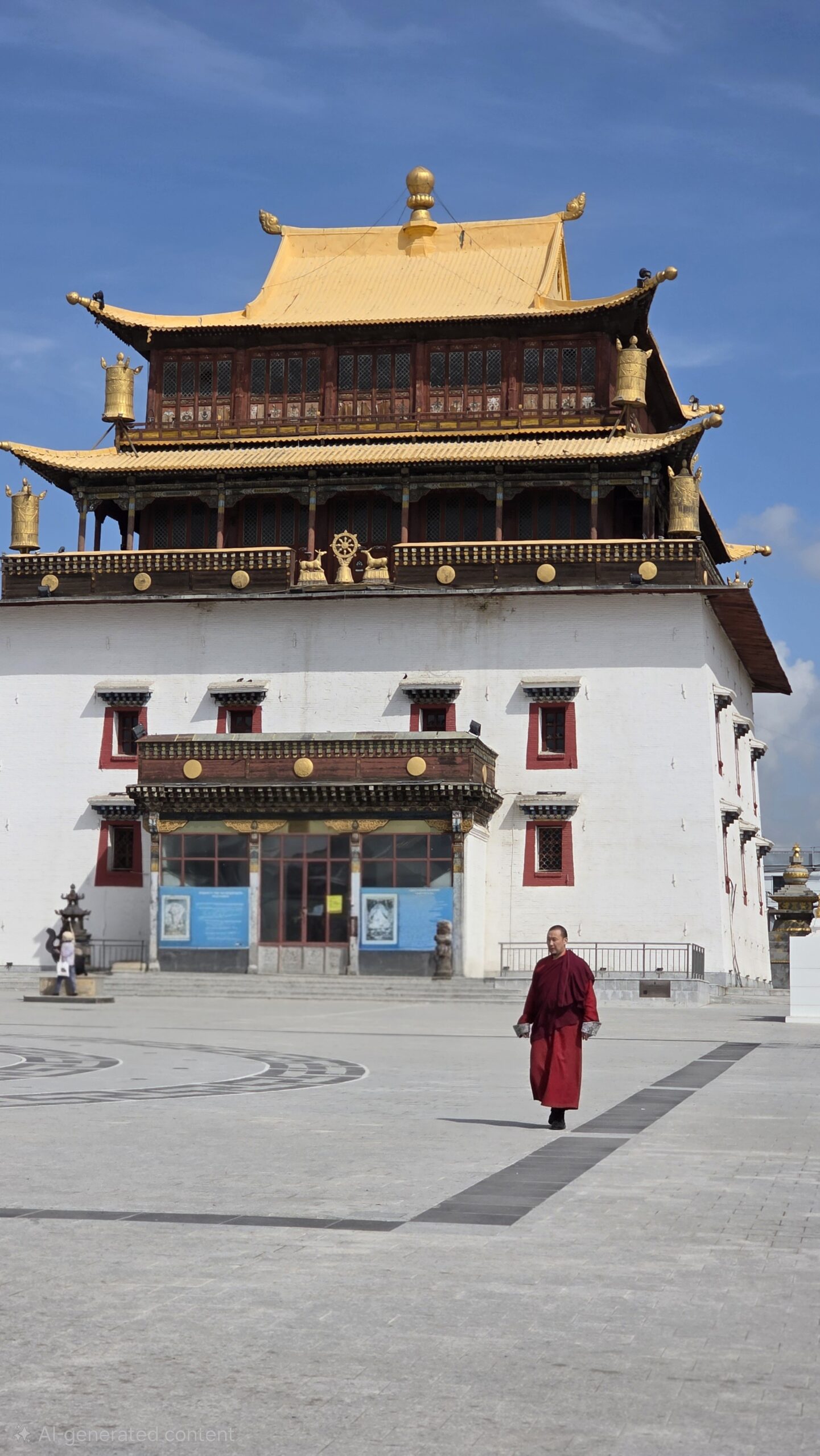
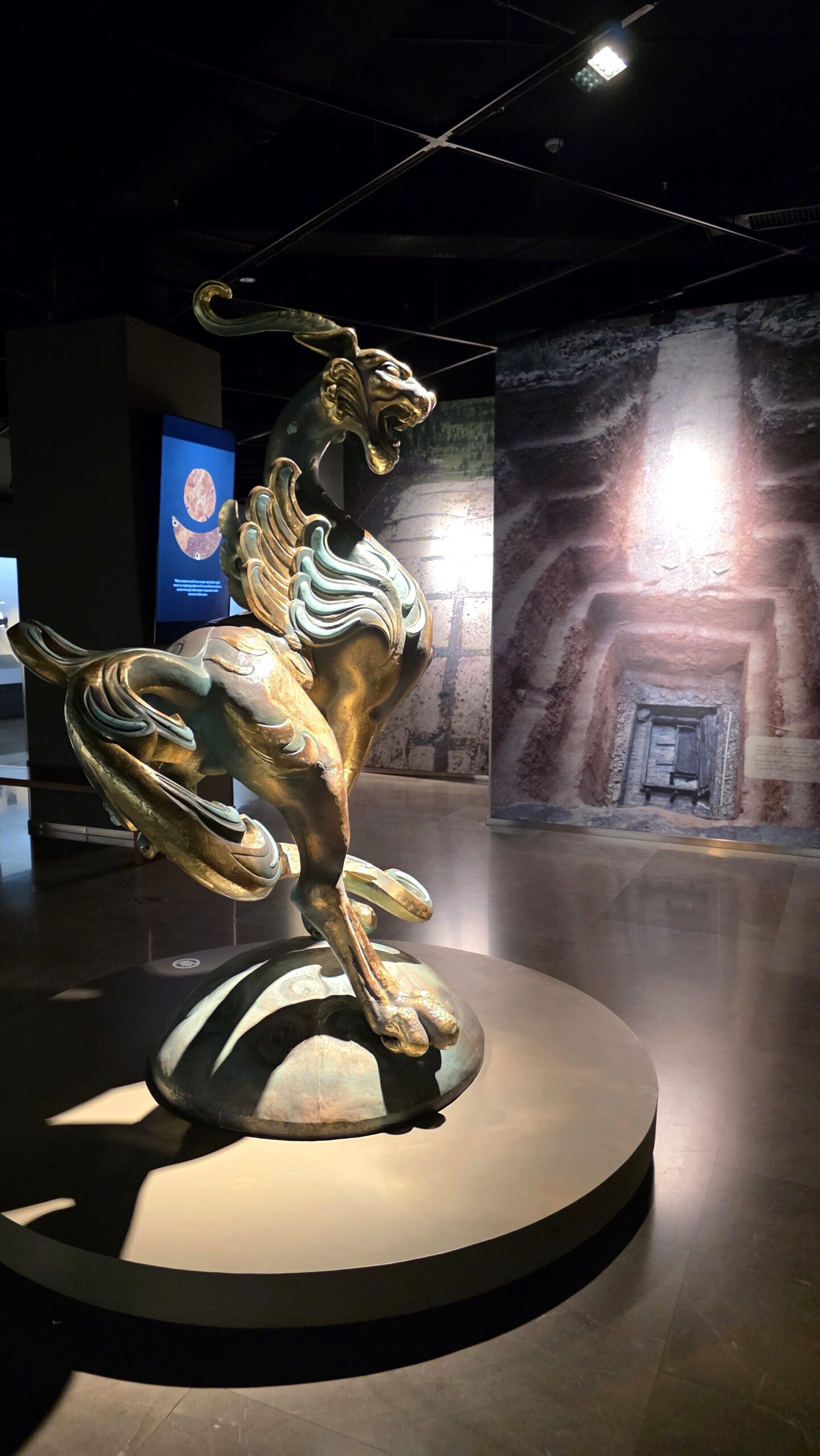
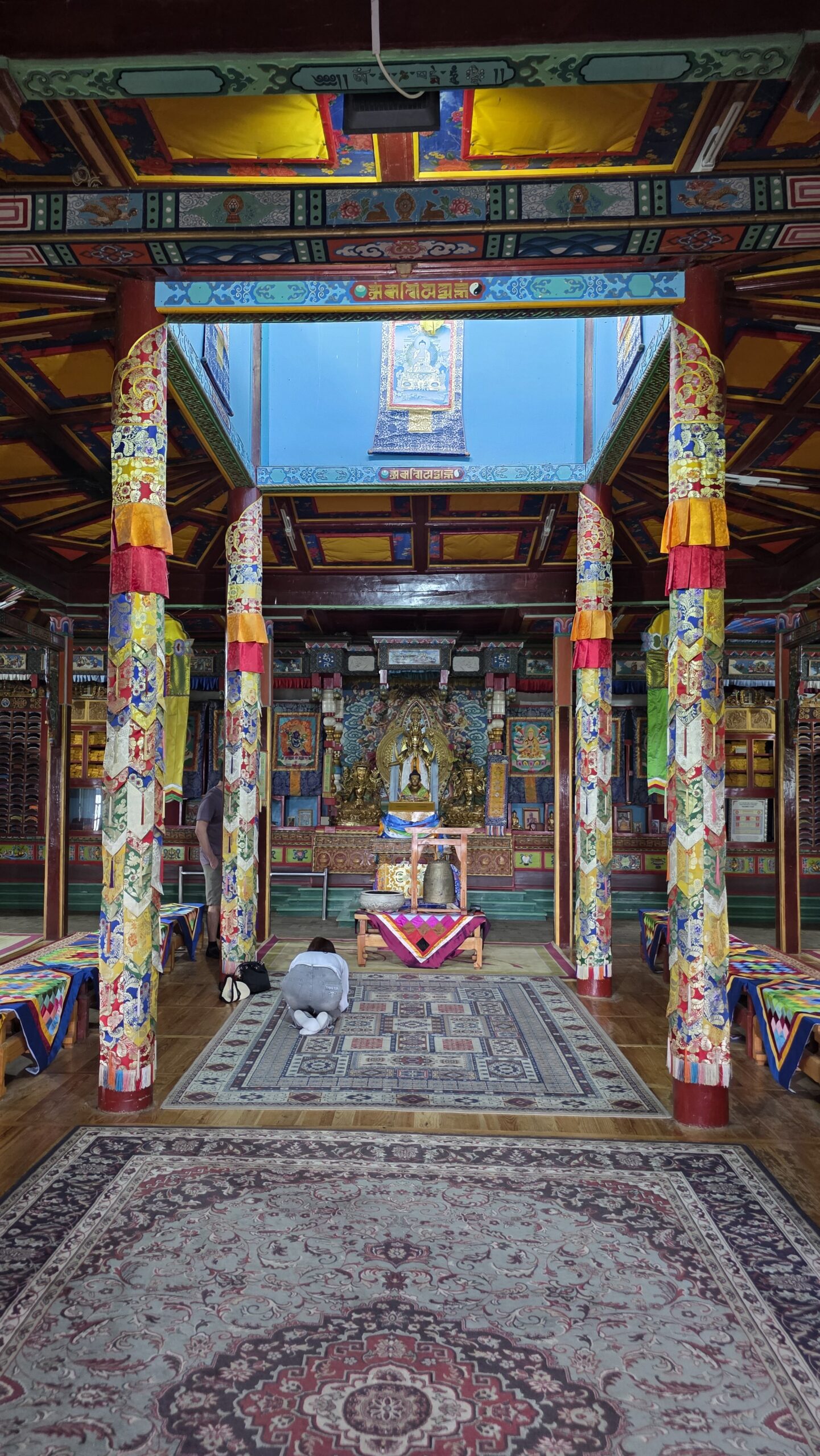
Begin at Gandan Monastery, the center of Buddhism in Mongolia, which escaped the destruction of the 1930s purges and, after a closure, reopened in 1944 as the country’s only working monastery. Continue to the Chinggis Khan Museum, which opened in 2022 and holds more than 10,000 exhibits across nine floors, tracing 2,000 years from the Xiongnu Empire through the era of the Great Khans. In the evening, gather for a welcome dinner at a fine local restaurant.
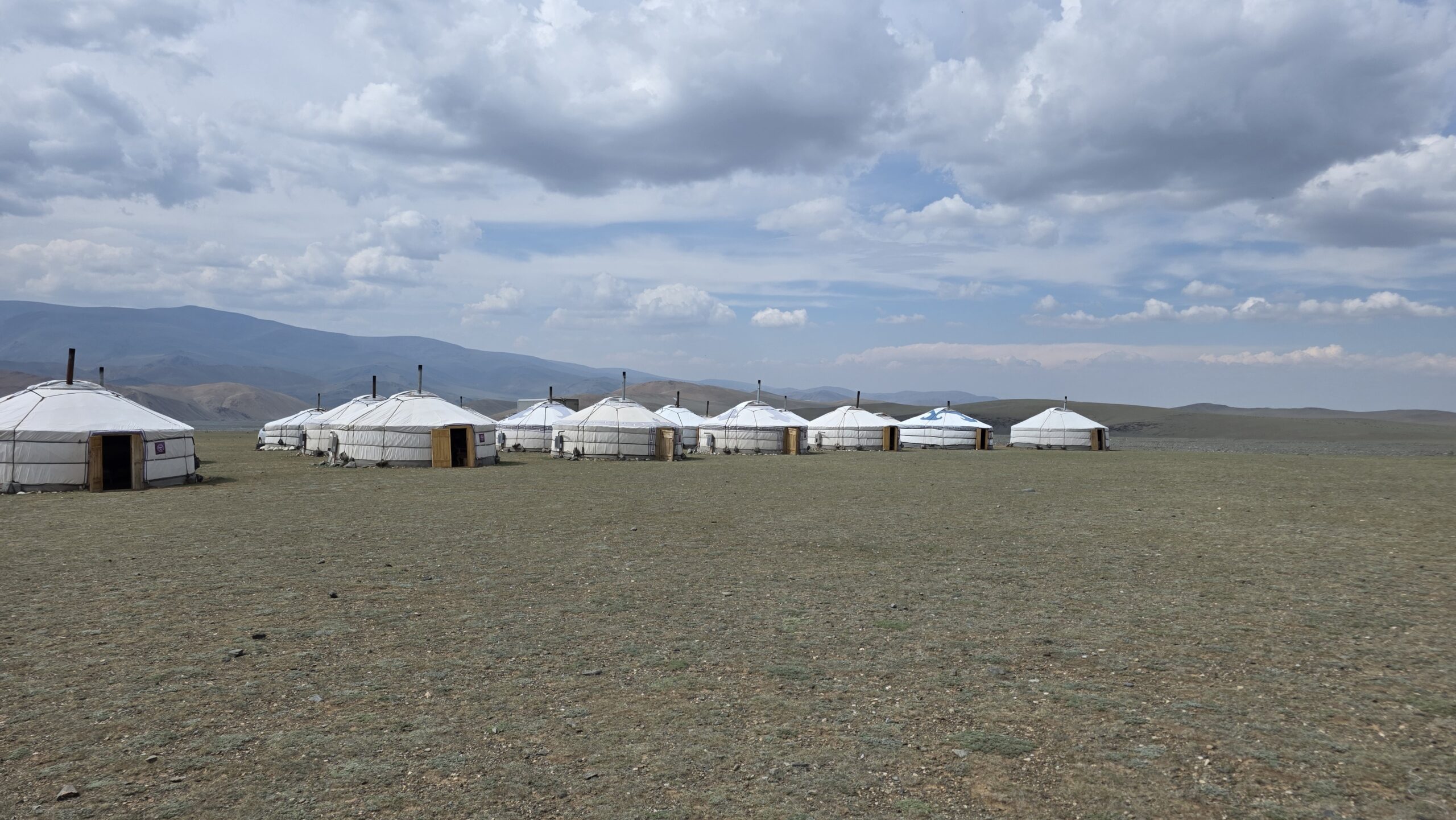
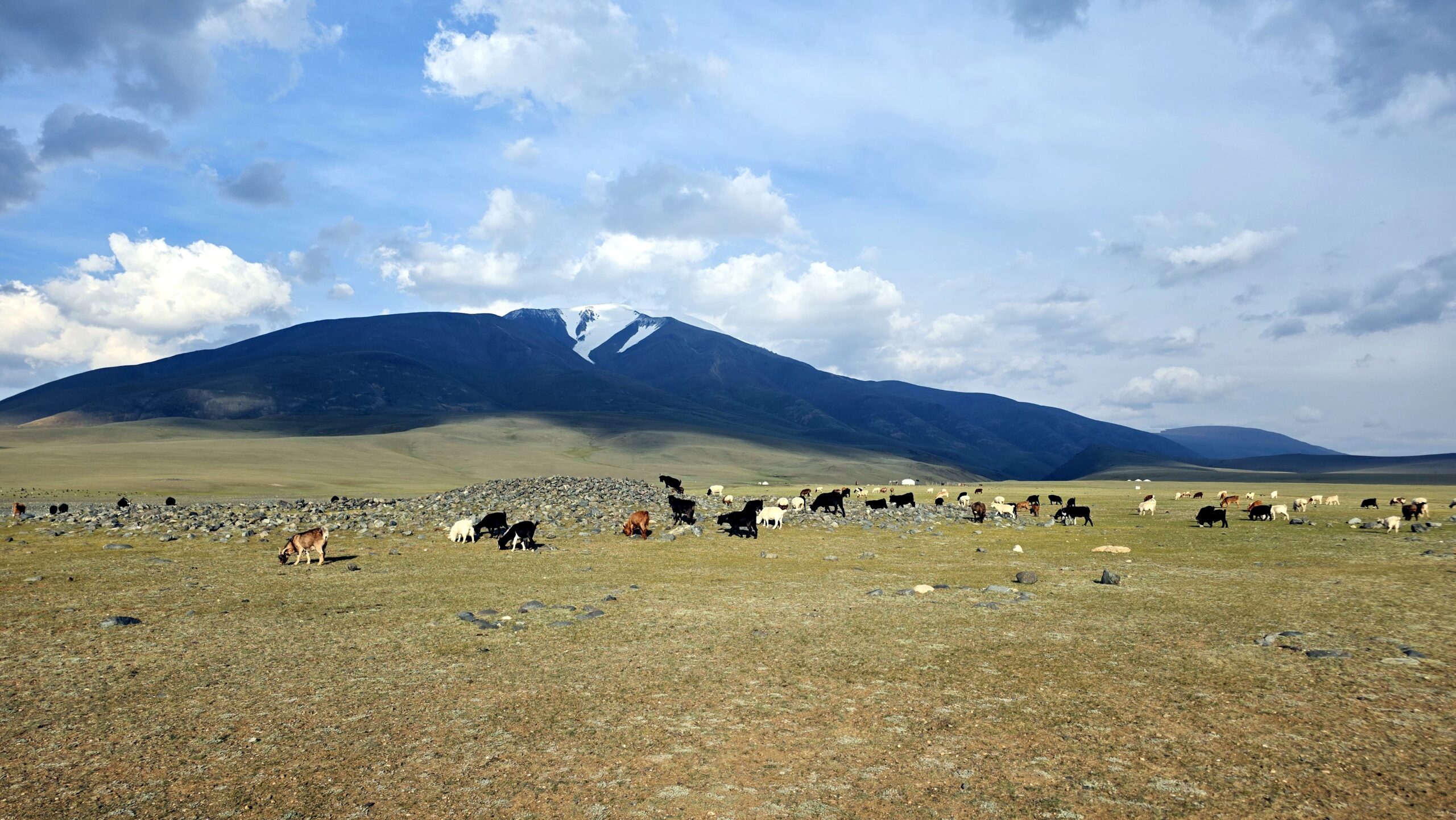
Fly to Khovd, and on arrival visit the Eagle Hunters Cultural Center, established with local and international partners to keep eagle-hunting culture and traditions alive and to protect the birds and the lands the hunters and their eagles call home. Then drive to Three Eagle Camp, a ger camp at the base of permanently snow-capped Tsambagarav Mountain (roughly 13,800 ft), and spend the evening exploring the country around the camp on foot.
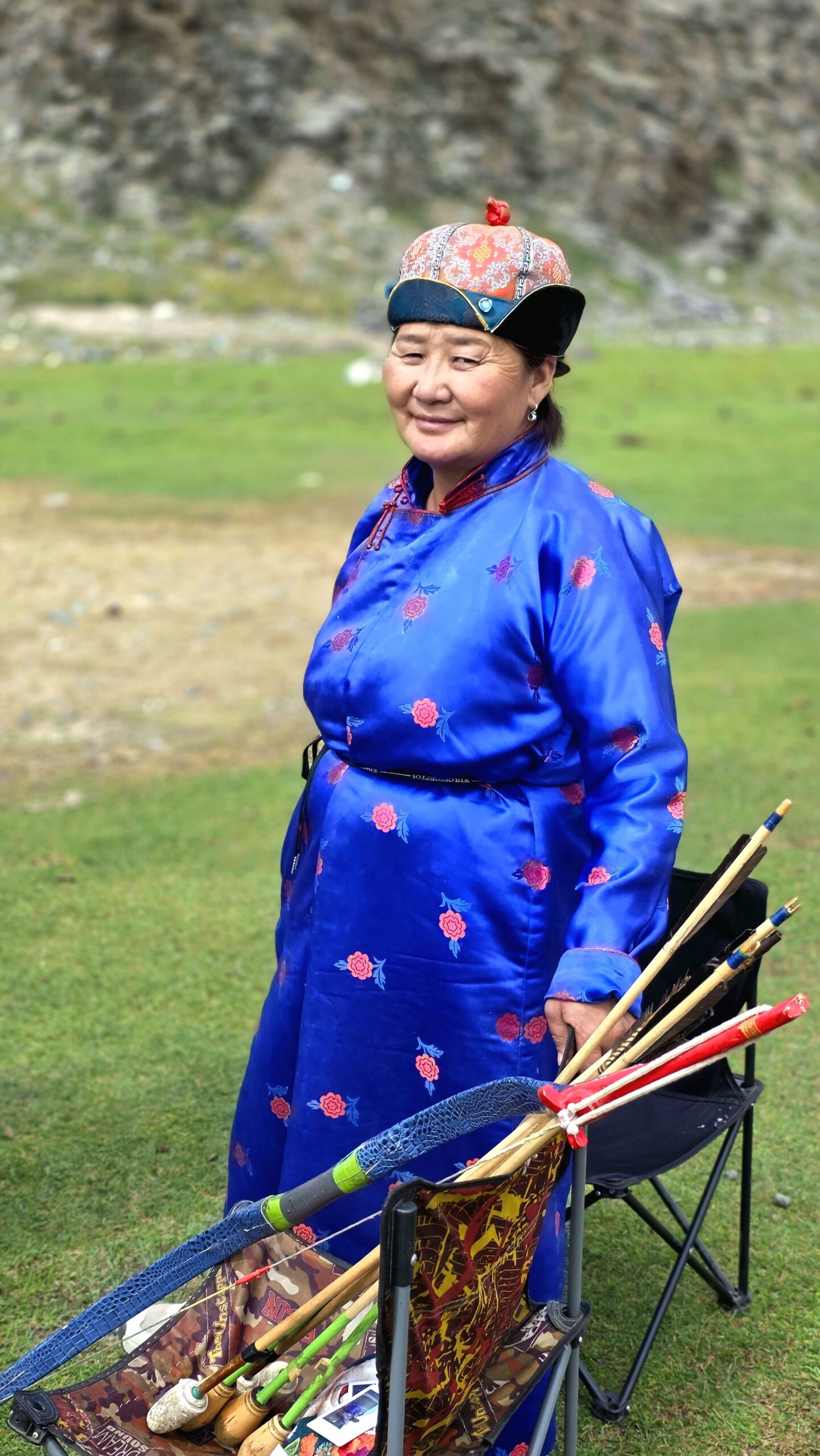
Drive into Namarjin Valley, in the shadow of Tsambagarav, and spend the day with an Uuld nomad family, learning a herding life built around dairy. Mongolia counts more than 100 varieties of dairy products, including aaruul, the hardened curds found in nearly every ger. Later, visit an Uriankhai family, famed for their craftsmanship, and watch an archery demonstration with their formidable composite bows.
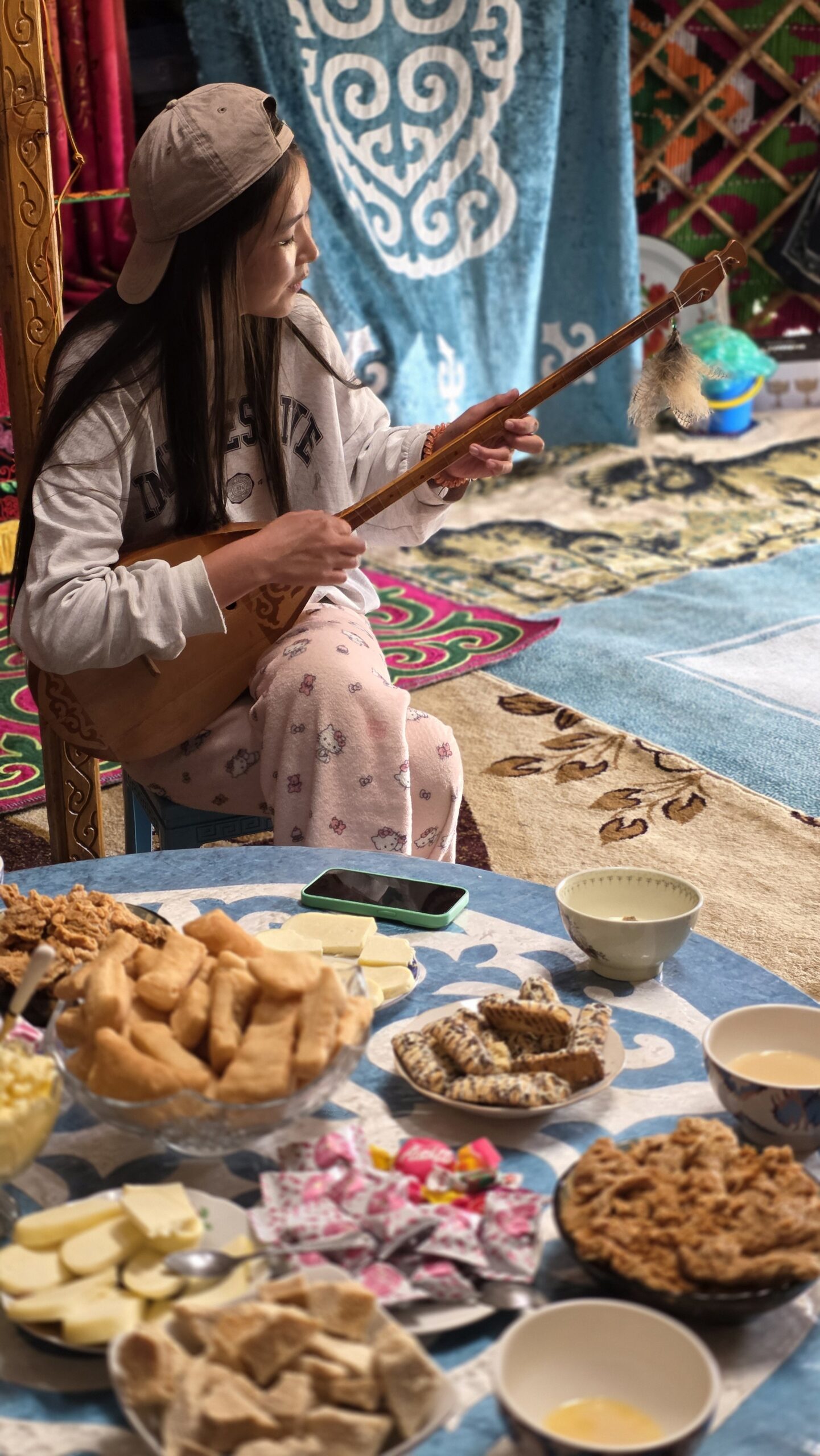
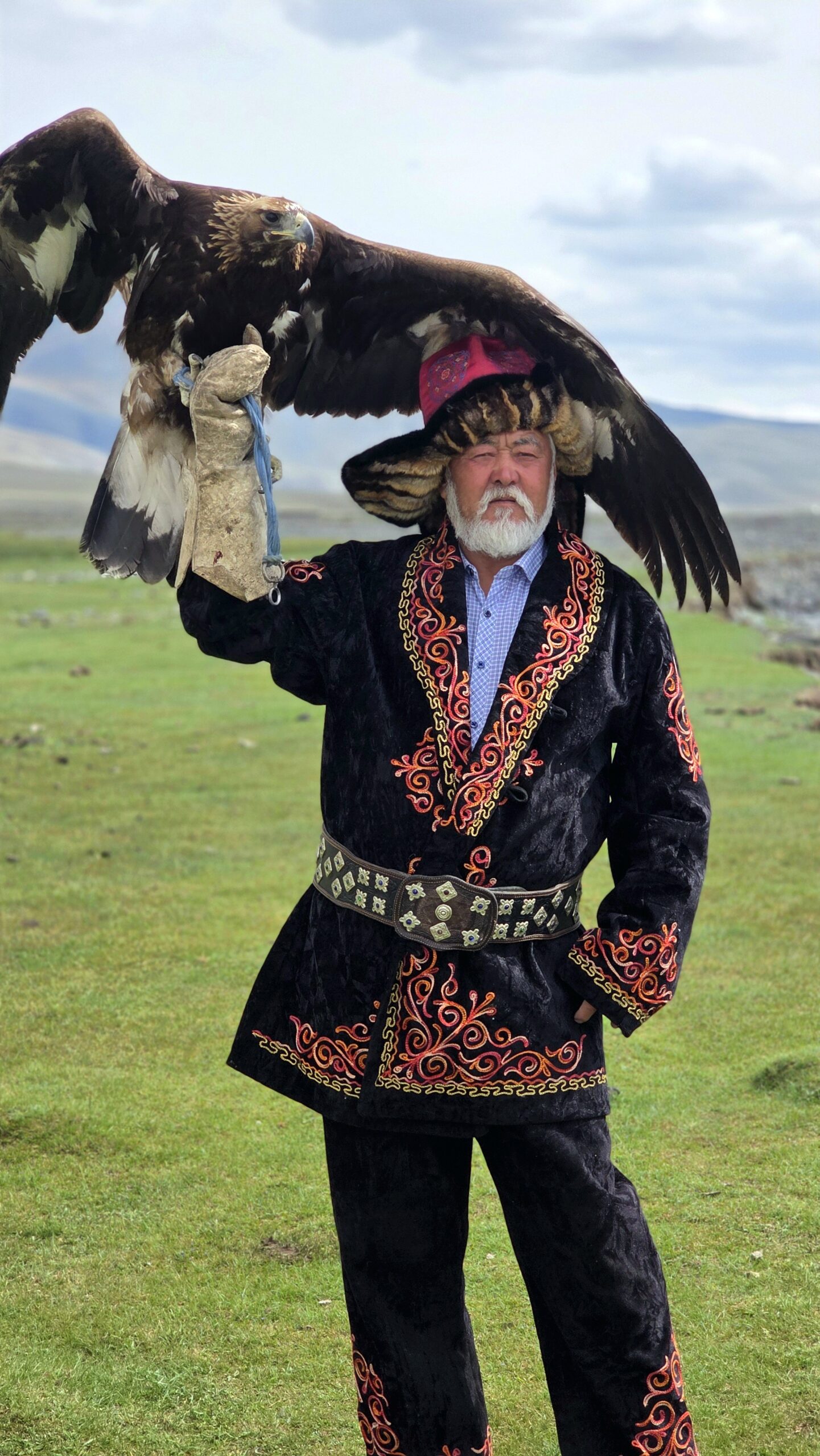
The morning belongs to Kazakh horsemanship: lassoing and bareback riding, “Tinge Ilu” (snatching coins from the ground at full gallop), and the playful Kizguar courting game. In the afternoon, visit the Kazakh eagle hunters, whose falconry tradition stretches back more than a thousand years: learn how the great golden eagles are trained and cared for, and, when conditions allow, watch hunter and eagle work together. Dinner is with a Kazakh family: a traditional besbermakh meat platter, with music and song.
Fly back to Ulaanbaatar. Visit a local women’s workshop practicing Zeeg appliqué, the intricate embroidery once created as offerings for monasteries, and the Made in Mongolia store, where women trained through the Asral NGO’s program turn traditional felt-making skills into beautifully crafted goods.
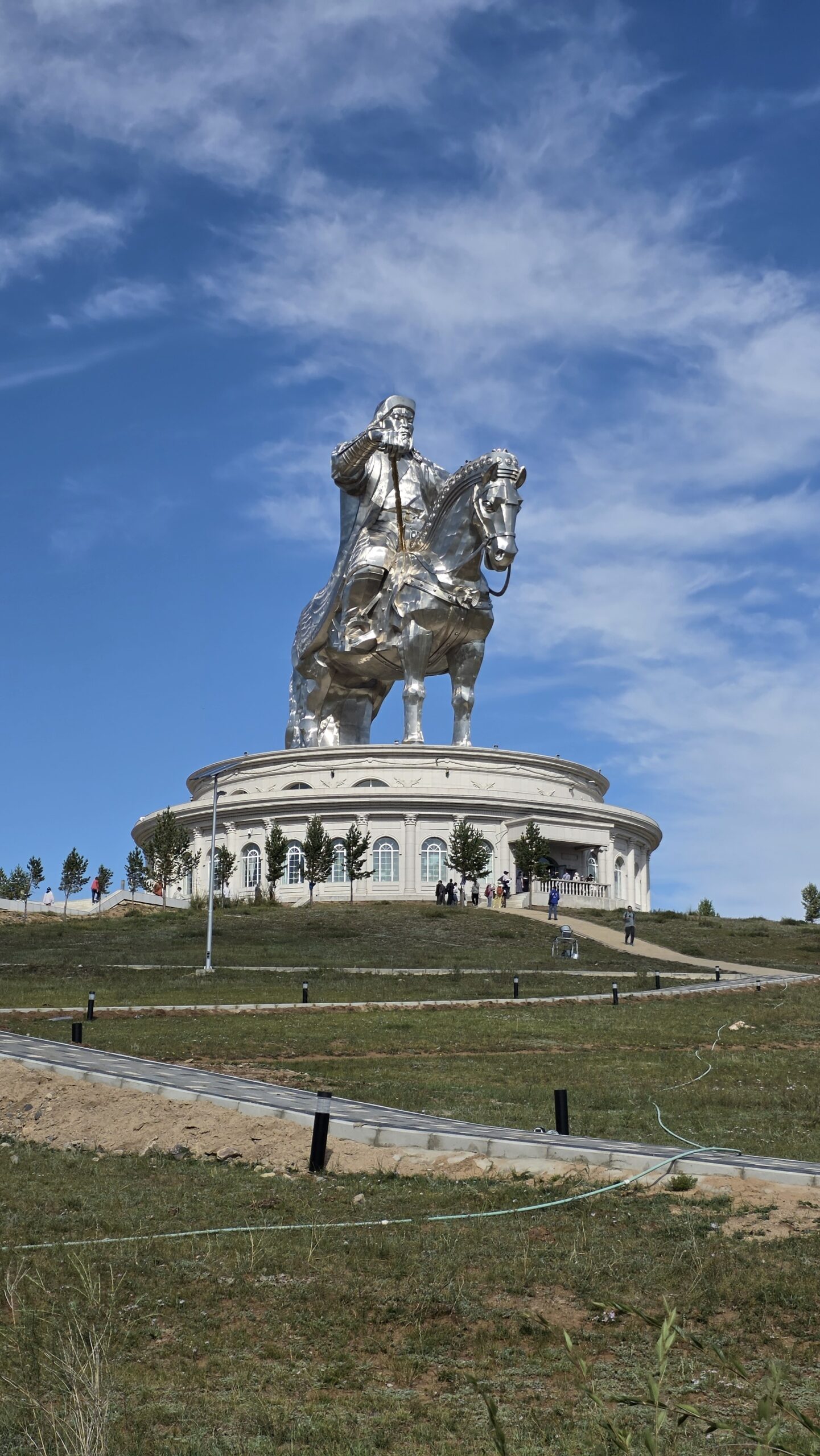
Drive to Tsonjin Boldog, where the colossal Chinggis Khan Equestrian Statue, 250 tons of gleaming stainless steel, rises over the steppe; ride the elevator up through the horse’s body and climb to the deck on its head for the view. Continue into Gorkhi-Terelj National Park, which you can explore on foot or on horseback, to see Turtle Rock and hike across the “Bridge that Leads to Wisdom” and up 108 steps to Aryabal Monastery. In the park, experience a traditional shaman ceremony, as the Ulaach (the shaman) drums and calls on the ancestral spirits, a practice rooted in Mongolia long before Buddhism arrived. Return to Ulaanbaatar for the evening.
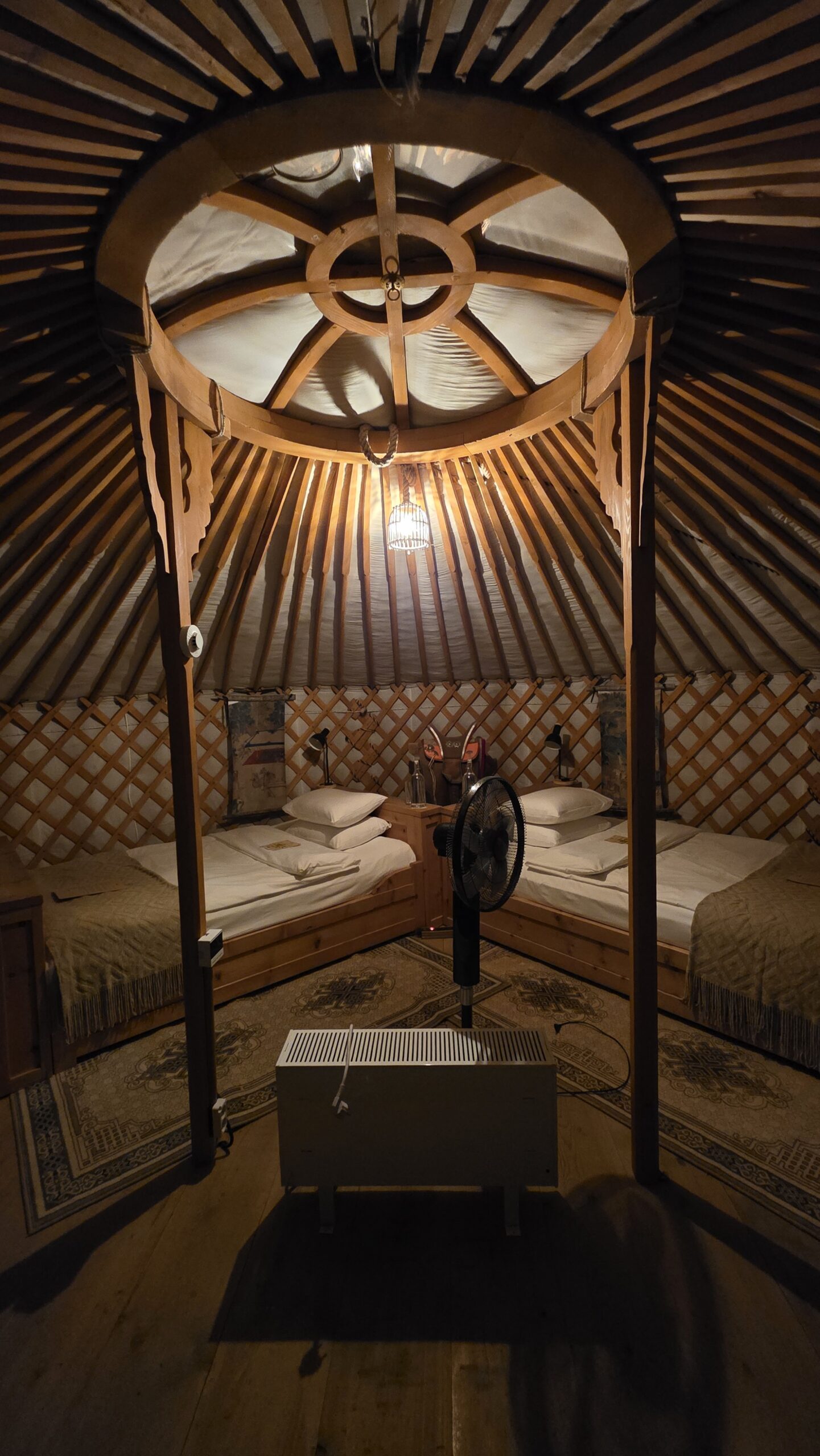
Spend the morning in a Mongolian calligraphy class with an expert calligrapher, a relaxed introduction to the traditional vertical script, an art UNESCO has inscribed as intangible cultural heritage in need of urgent safeguarding. After lunch, fly south to Dalanzadgad and drive to Three Camel Lodge, a founding member of National Geographic Unique Lodges of the World, on the edge of Gobi Gurvansaikhan National Park, and settle into your deluxe ger.
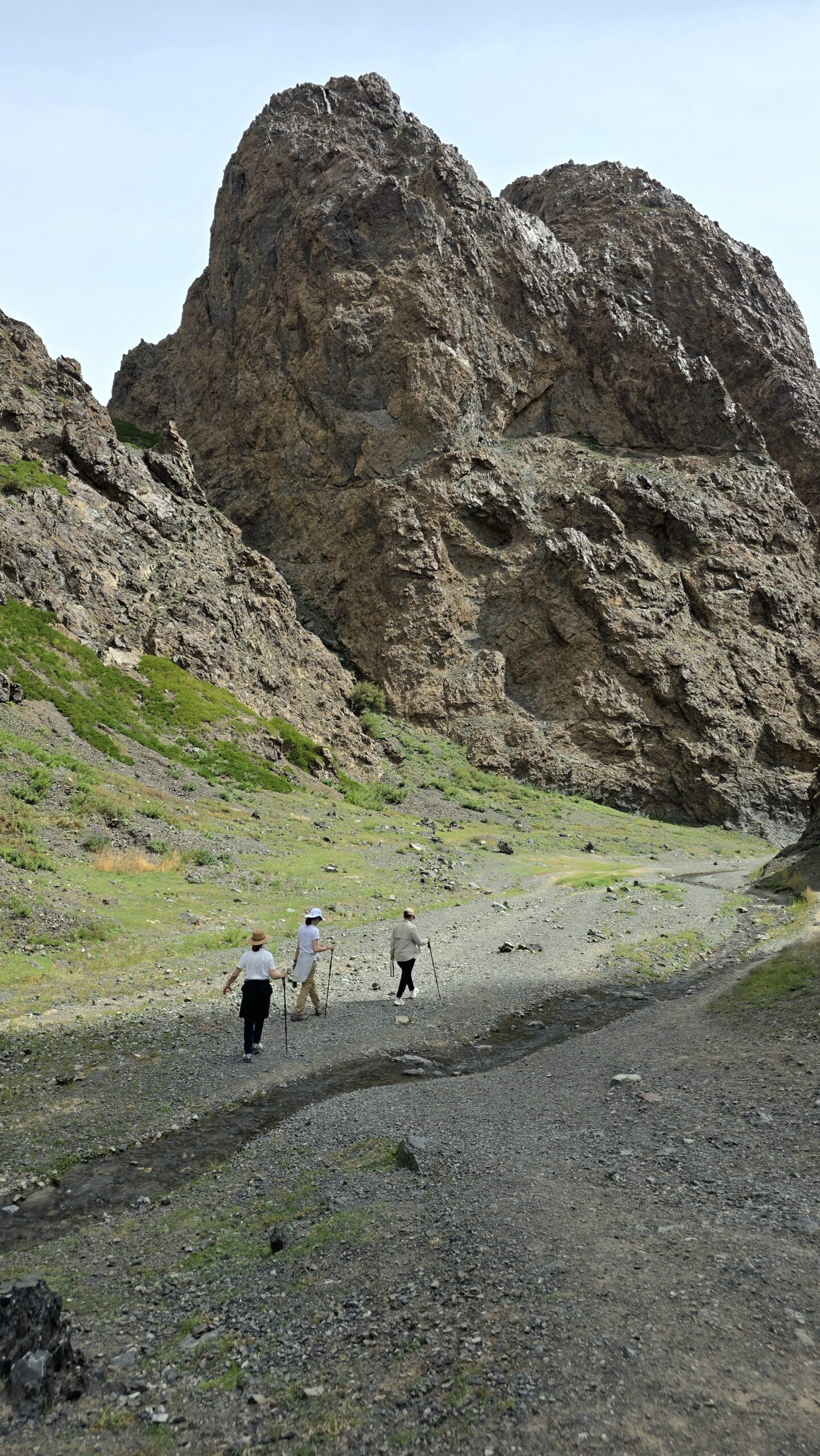
Drive to Yol Valley, a deep, narrow gorge in the Zuun Saikhan Mountains, named for the yol, the lammergeier or bearded vulture, that is sometimes seen soaring above its cliffs. Visit the small wildlife museum, then hike the narrow valley along its stream, returning to the lodge through the Dungenee gorge.
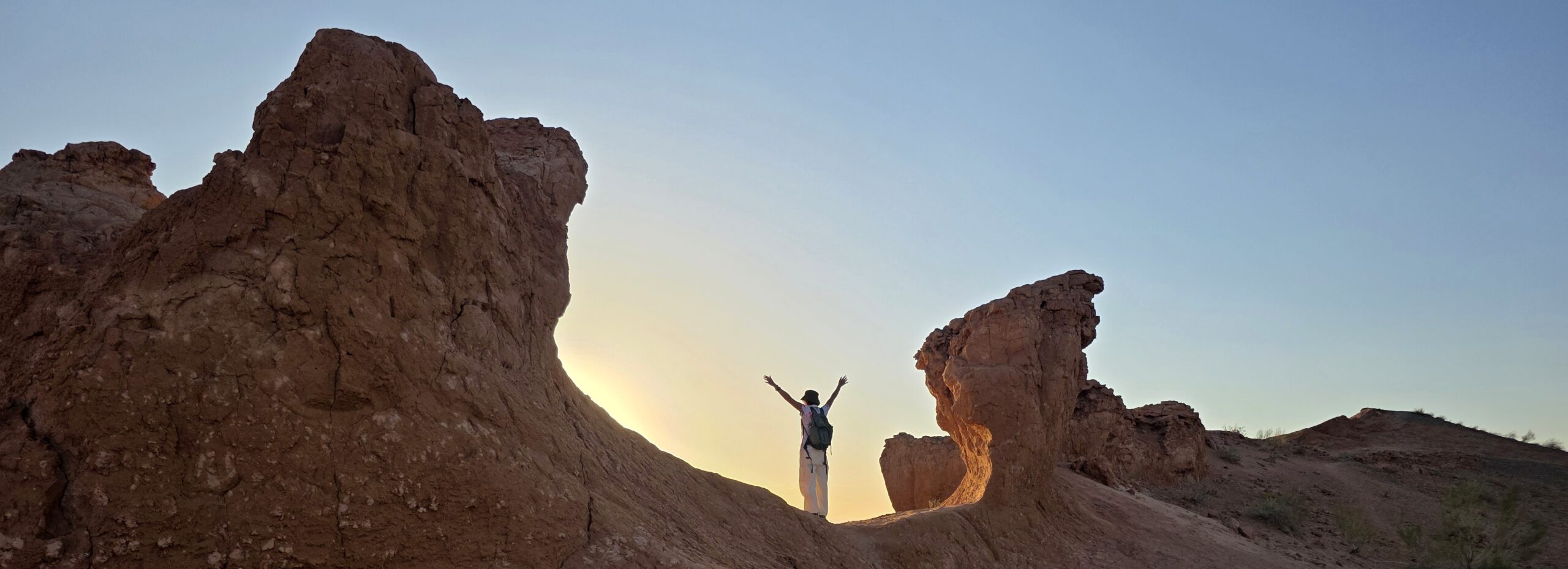
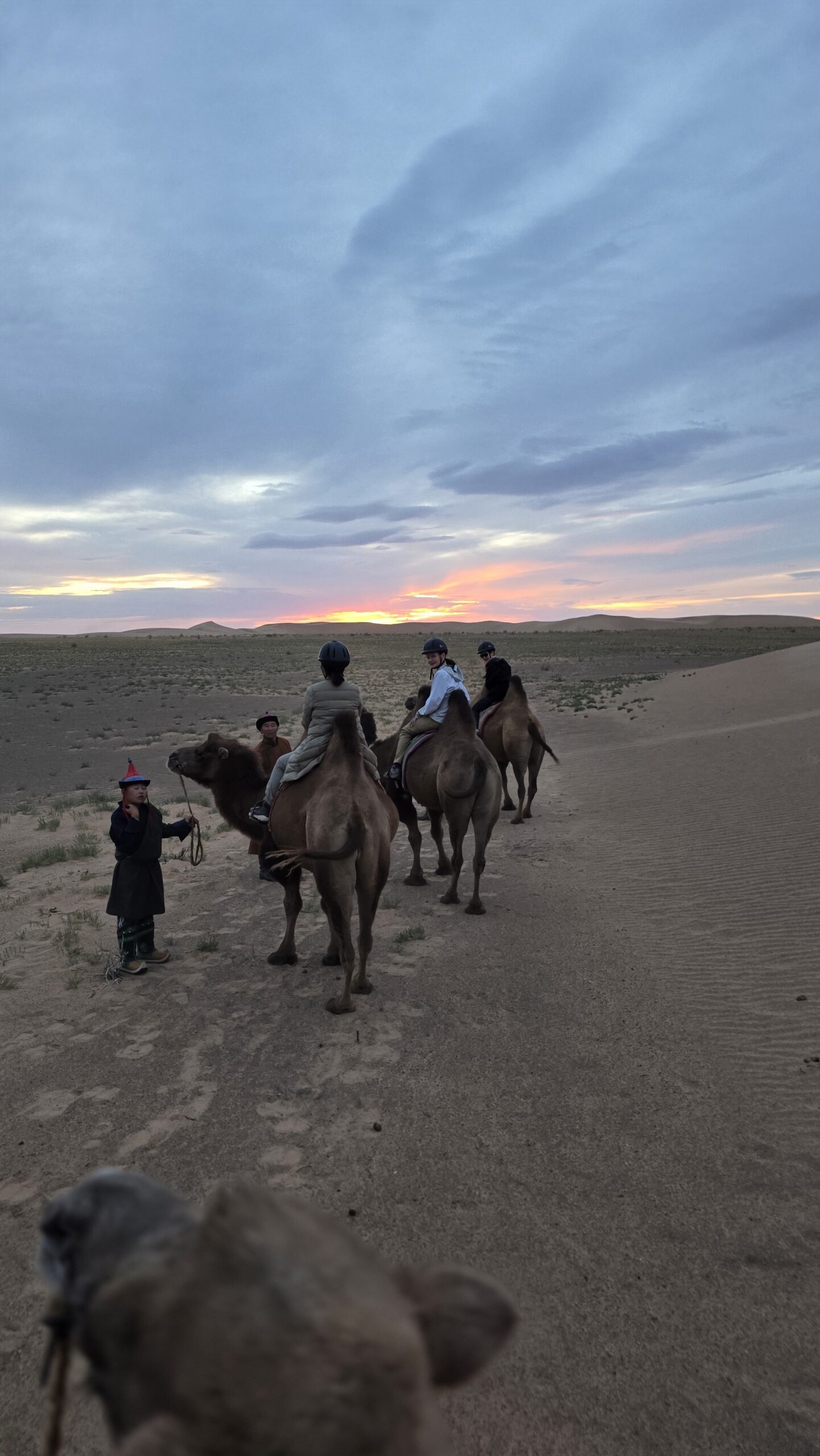
In the morning, explore the dunes of Moltsog Els on foot or, if you like, on the back of a Bactrian camel, and visit a camel-herding family. In the afternoon, travel to the legendary Flaming Cliffs, named for red-orange sandstone that glows deepest near sunrise and sunset, the site where Roy Chapman Andrews’ expedition found the first recognized nest of dinosaur eggs in 1923.
Enjoy a morning at leisure at the lodge before the flight from Dalanzadgad back to Ulaanbaatar and the Shangri-La Hotel. The evening is yours.
A flexible day with your guide and driver at your disposal. Browse the cashmere at Gobi Cashmere and boutiques such as Michel & Amazonka, and hunt through shops for felt and leather goods and one-of-a-kind pieces to bring home.
Transfer to the airport for your departing flight.